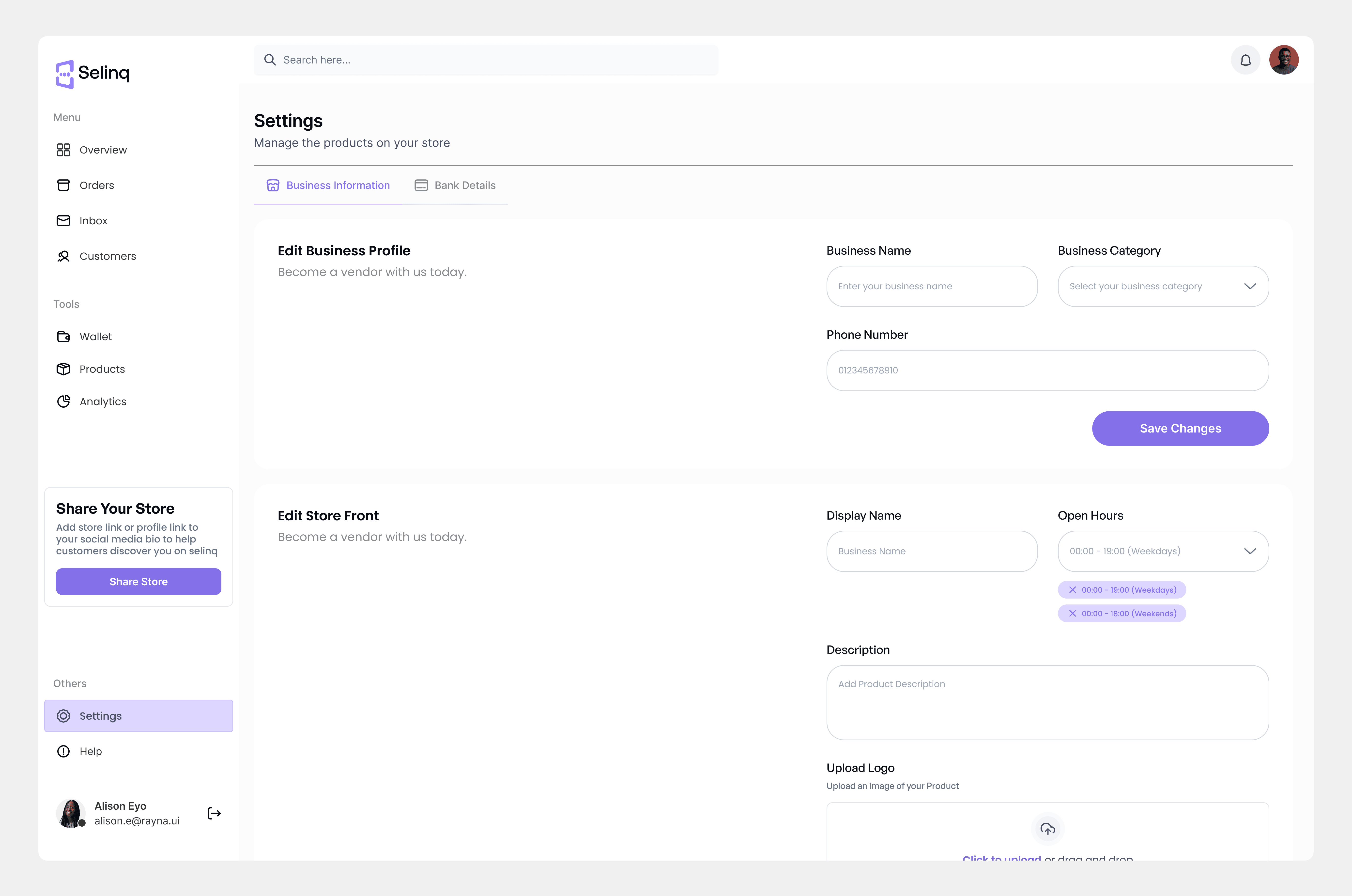
My roles: End-to-end Product Design, Design system management, User Research and Competitive analysis, Interaction Design, and contributing to business Strategy
B2C, E-Commerce

A marketplace built for how people actually buy
Selinq was born out of a simple observation: local vendors were everywhere (on streets, in markets, in communities) but had no reliable digital infrastructure to grow beyond word of mouth. At the same time, customers wanted speed and convenience, and a rising population of freelance riders were hungry for flexible earning opportunities.
The challenge wasn't just building a marketplace. It was building one where every party (vendor, customer, and rider) could participate with full confidence that they'd be treated fairly, paid honestly, and protected at every step of a transaction.
The Selinq MVP was scoped as a 6-week sprint to prove that this three-sided economy could function seamlessly, with a payments architecture robust enough to hold trust together.
"Fast, secure, community-driven commerce that connects vendors, customers, and freelance riders — in real time."
THE SOLUTION
Escrow as infrastructure, not just a feature
Selinq's solution was to make the escrow wallet the center of gravity for the entire platform. Instead of routing payments directly between parties, every transaction flows through Selinq's escrow held securely via Paystack subaccounts until the customer confirms delivery. Only then does the system release funds: a governed split that rewards vendors (85–90%), compensates riders (5%), and sustains the platform.
The platform was built as three coordinated surfaces: a Customer App for browsing, ordering, and live tracking; a Vendor Dashboard for product and order management; and a Rider App for delivery execution and earnings. An Admin Dashboard sits above it all the control room for escrow oversight, dispute resolution, and platform health.
The result was an MVP designed to hit 80% order completion and support 1,000+ users from day one.
Selinq is a fairly large product, and covering every screen would make this case study a small novel. I know you're not bored but I intend to keep things sharp. So below, I'll walk through a focused selection of the most impactful screens across the Admin and Vendor sections of the product .
SCREENS COVERED IN THIS CASE STUDY
Admin view
Dashboard
Escrow & transactions
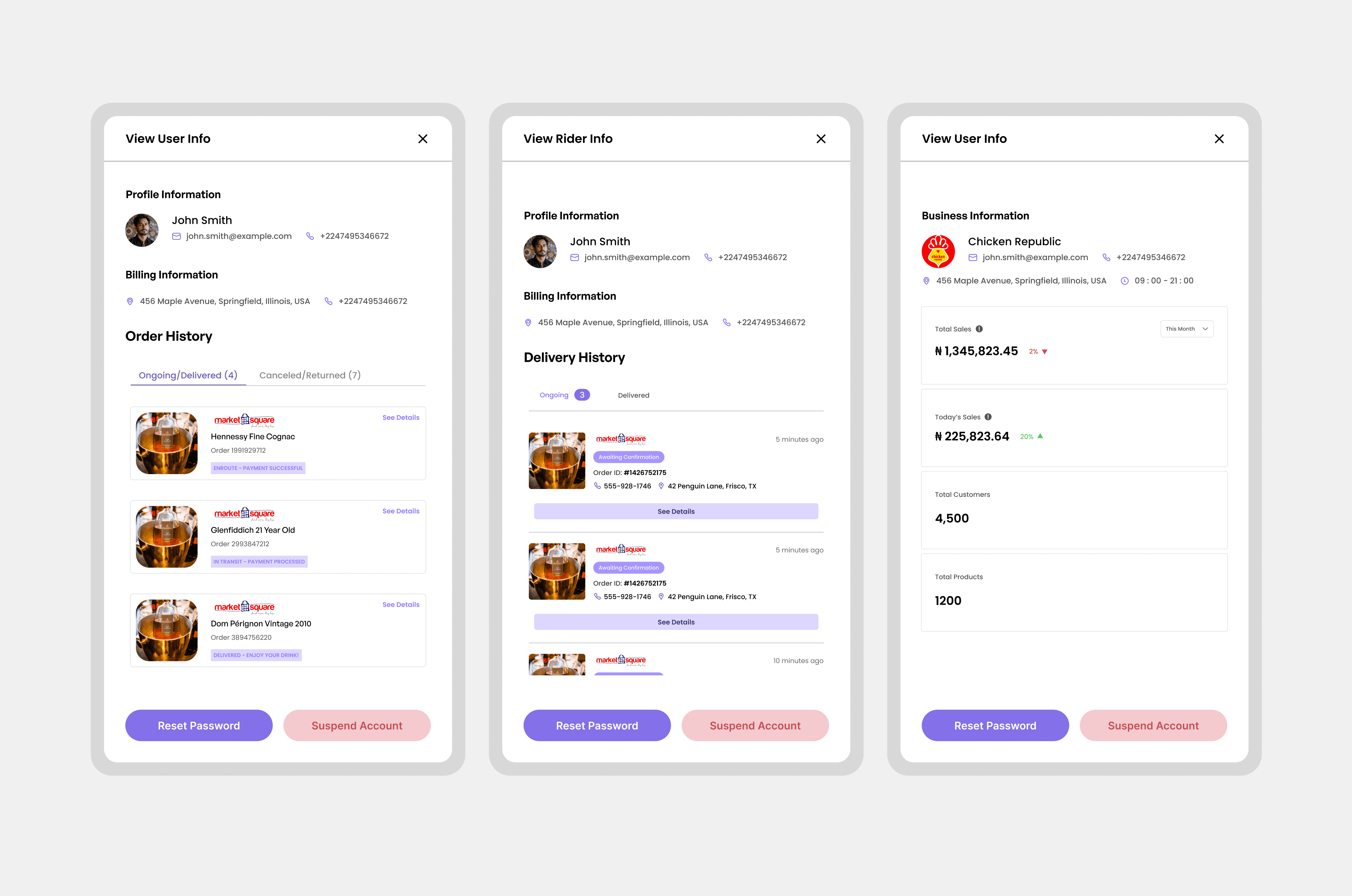
User management
Vendor view
Onboarding
Order management
Earnings & wallet
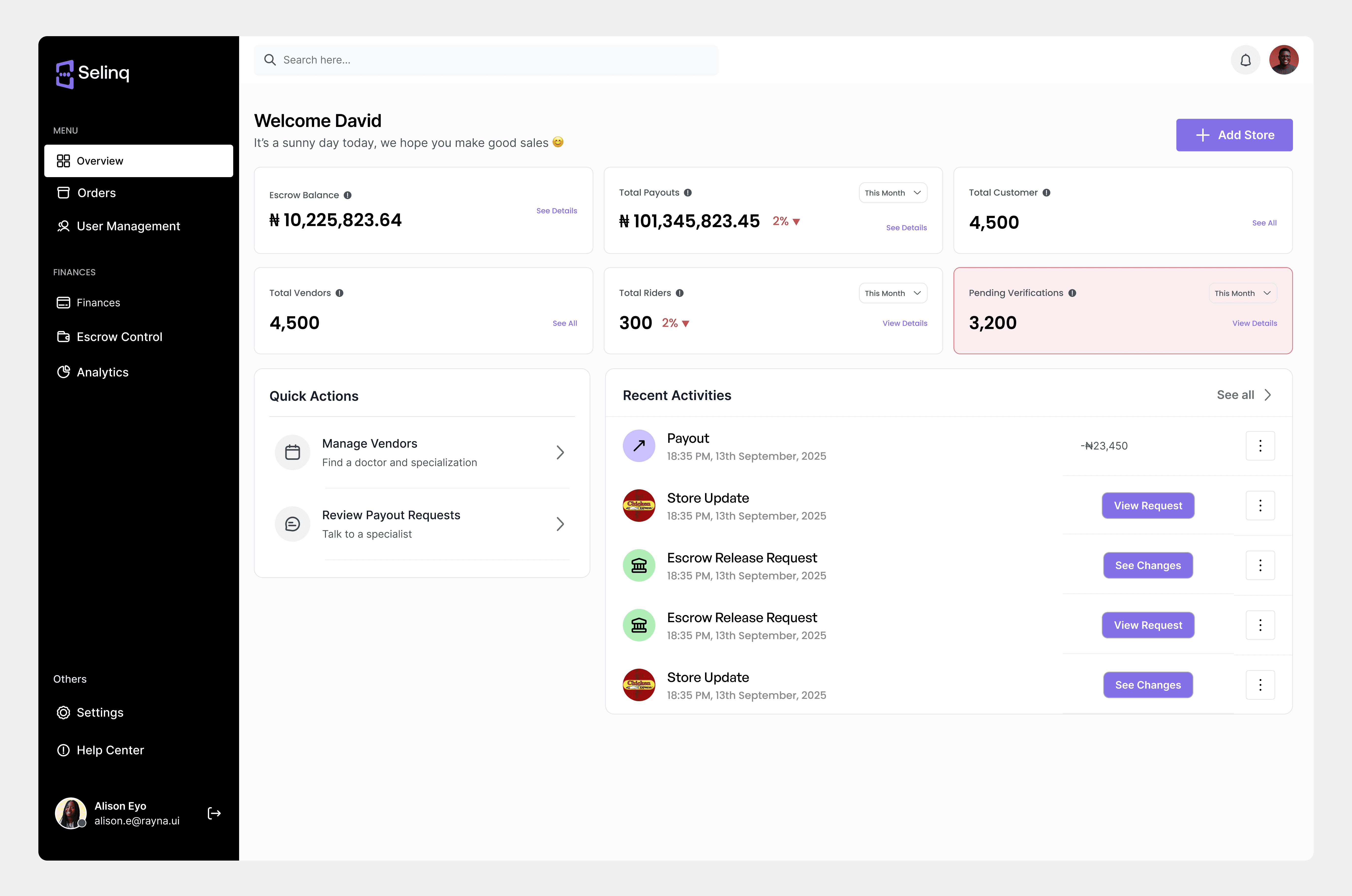
1.1 Dashboard
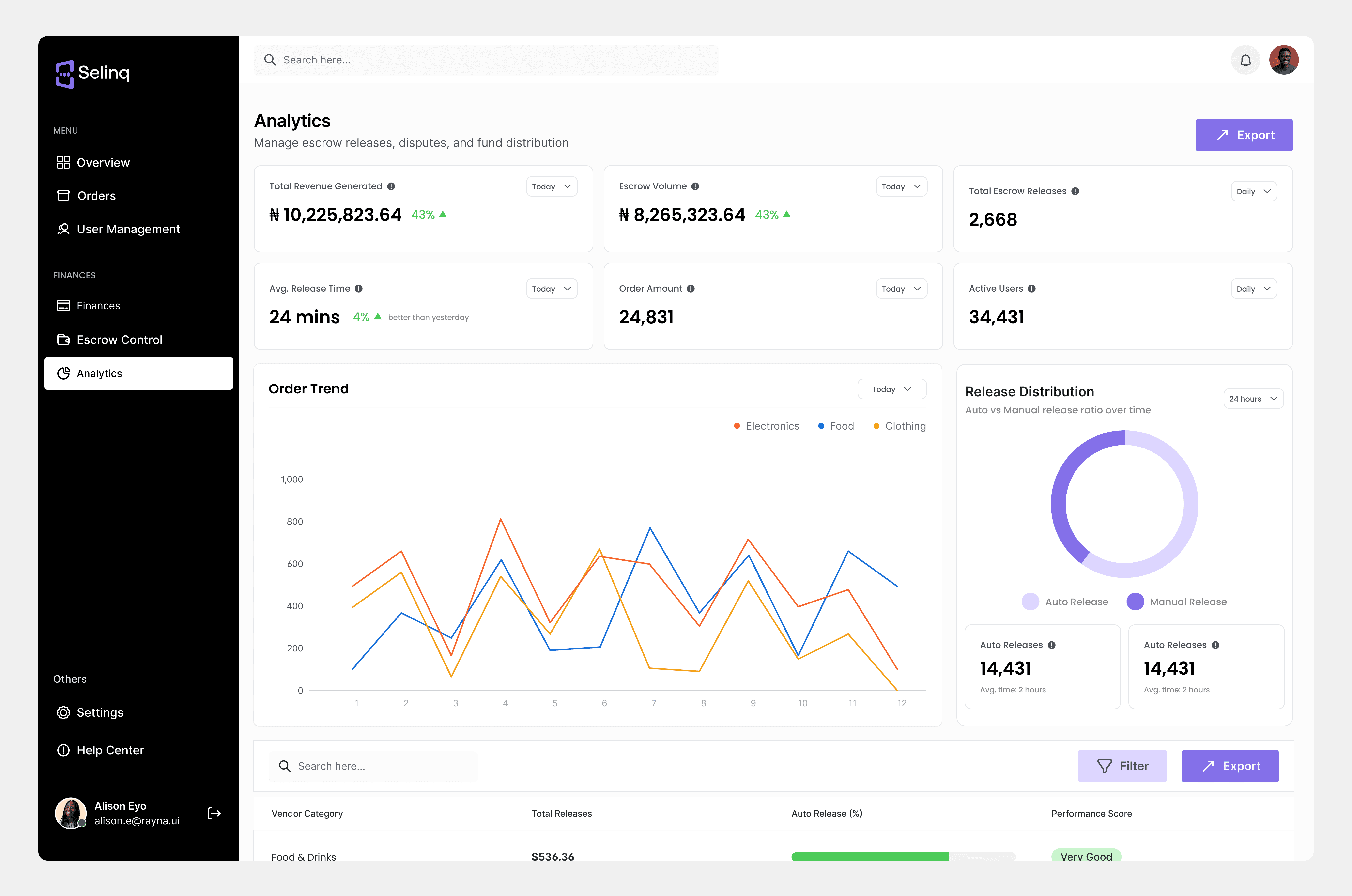
The admin's command centre. At a glance, the dashboard surfaces platform health (active users, daily orders, completion rates, delivery speed, and total escrow value.) It's designed so an admin can assess the entire platform's pulse in under ten seconds.
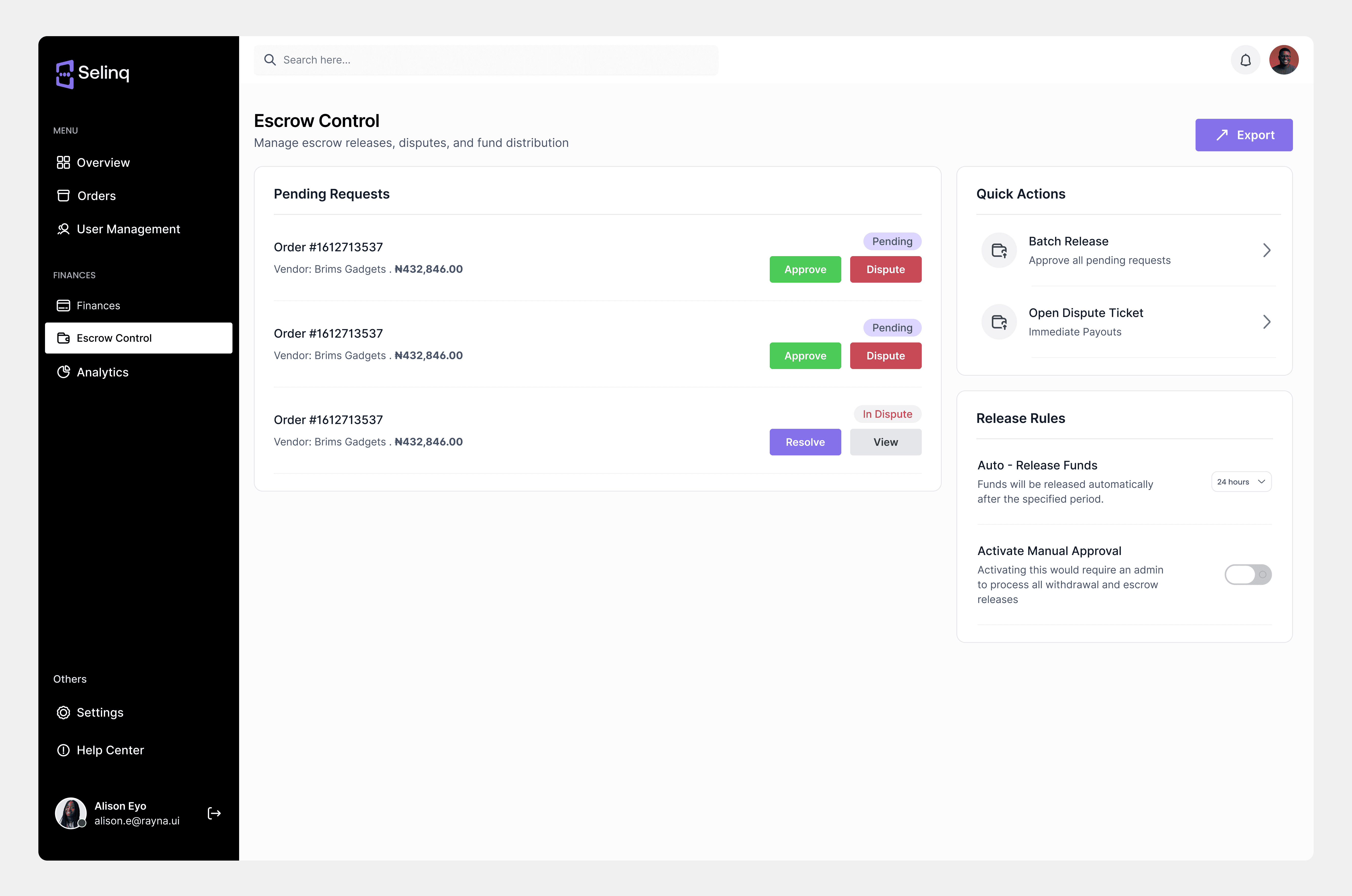
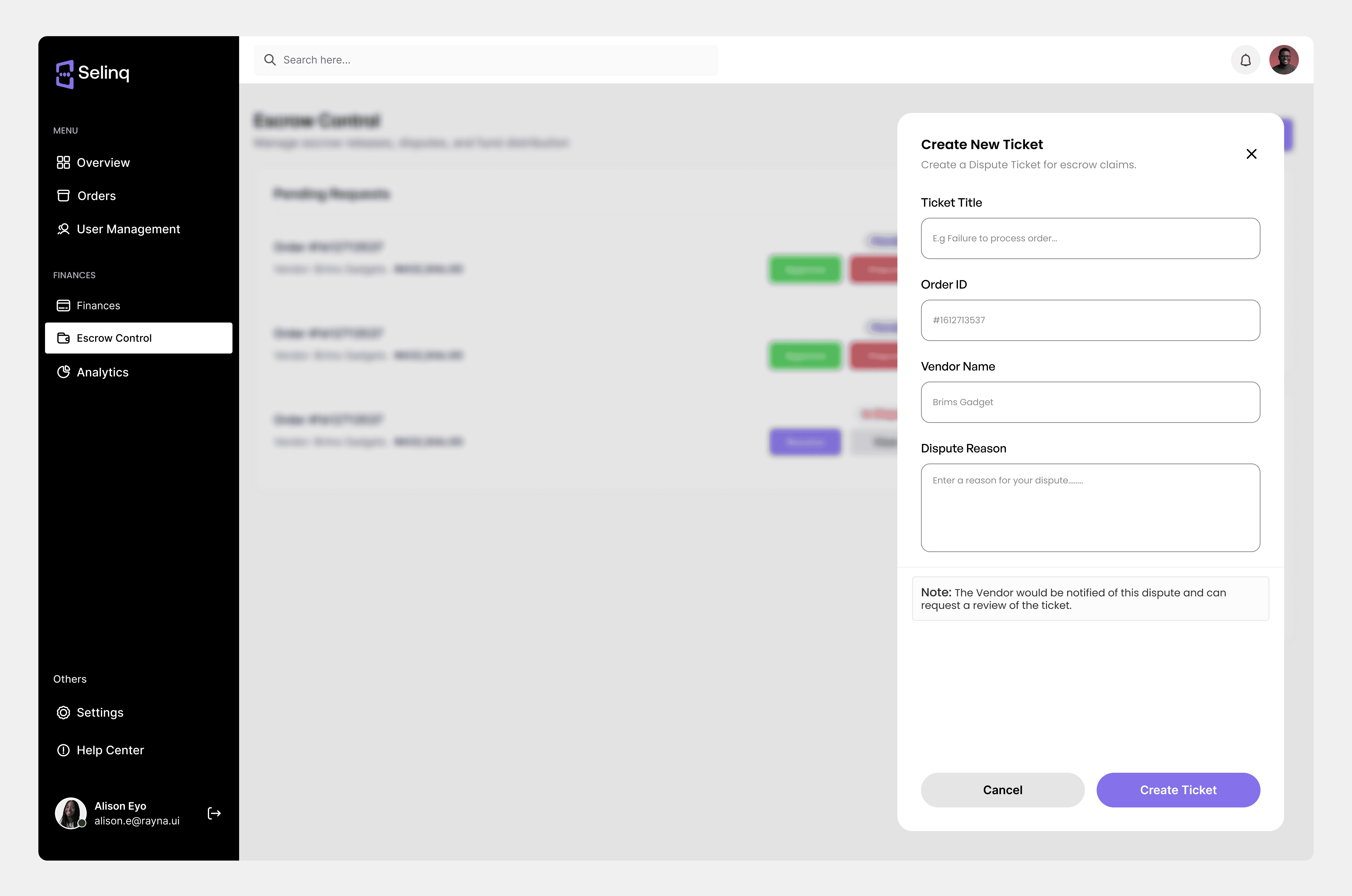
1.2 Escrow & Transactions
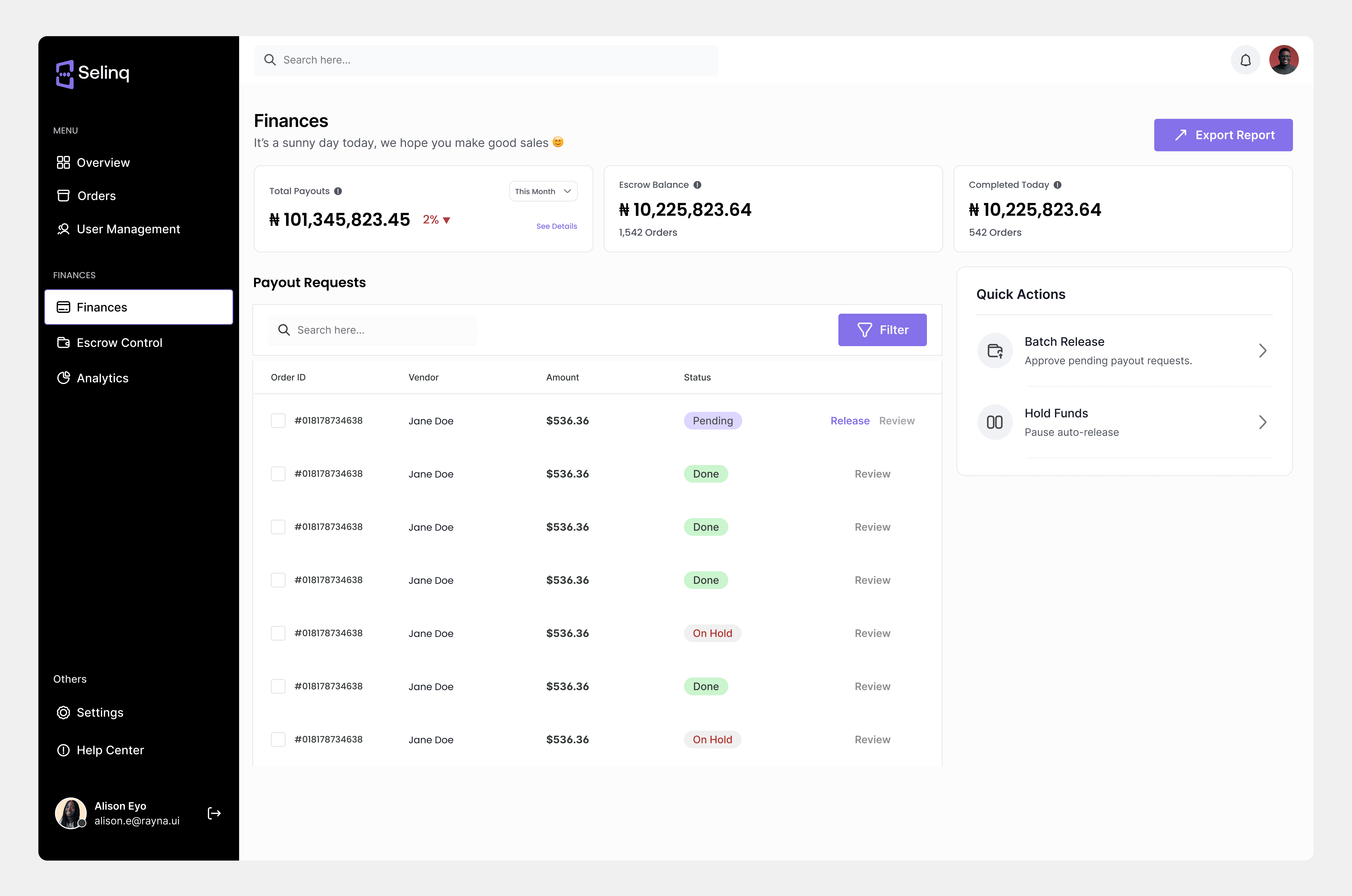
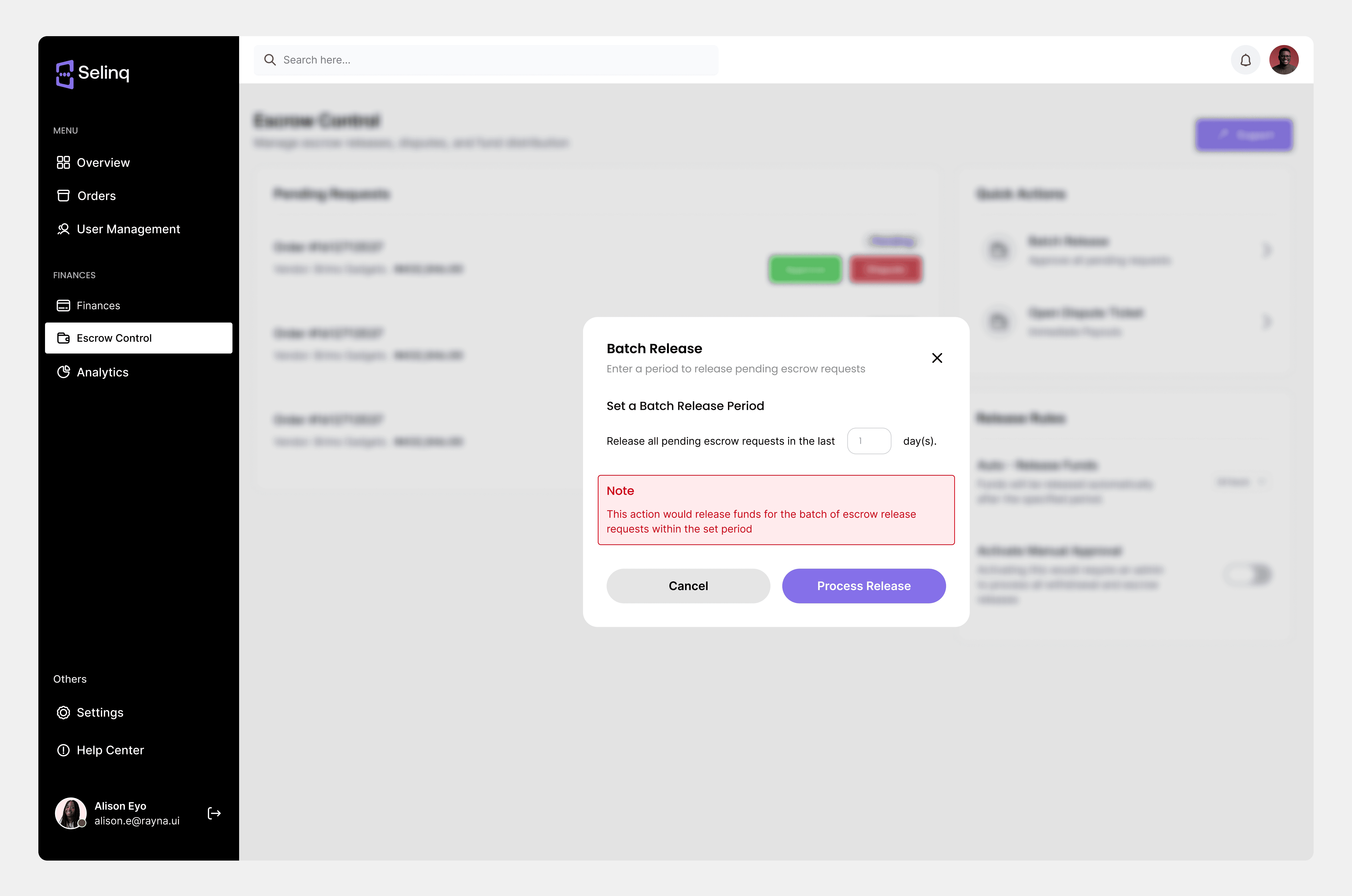
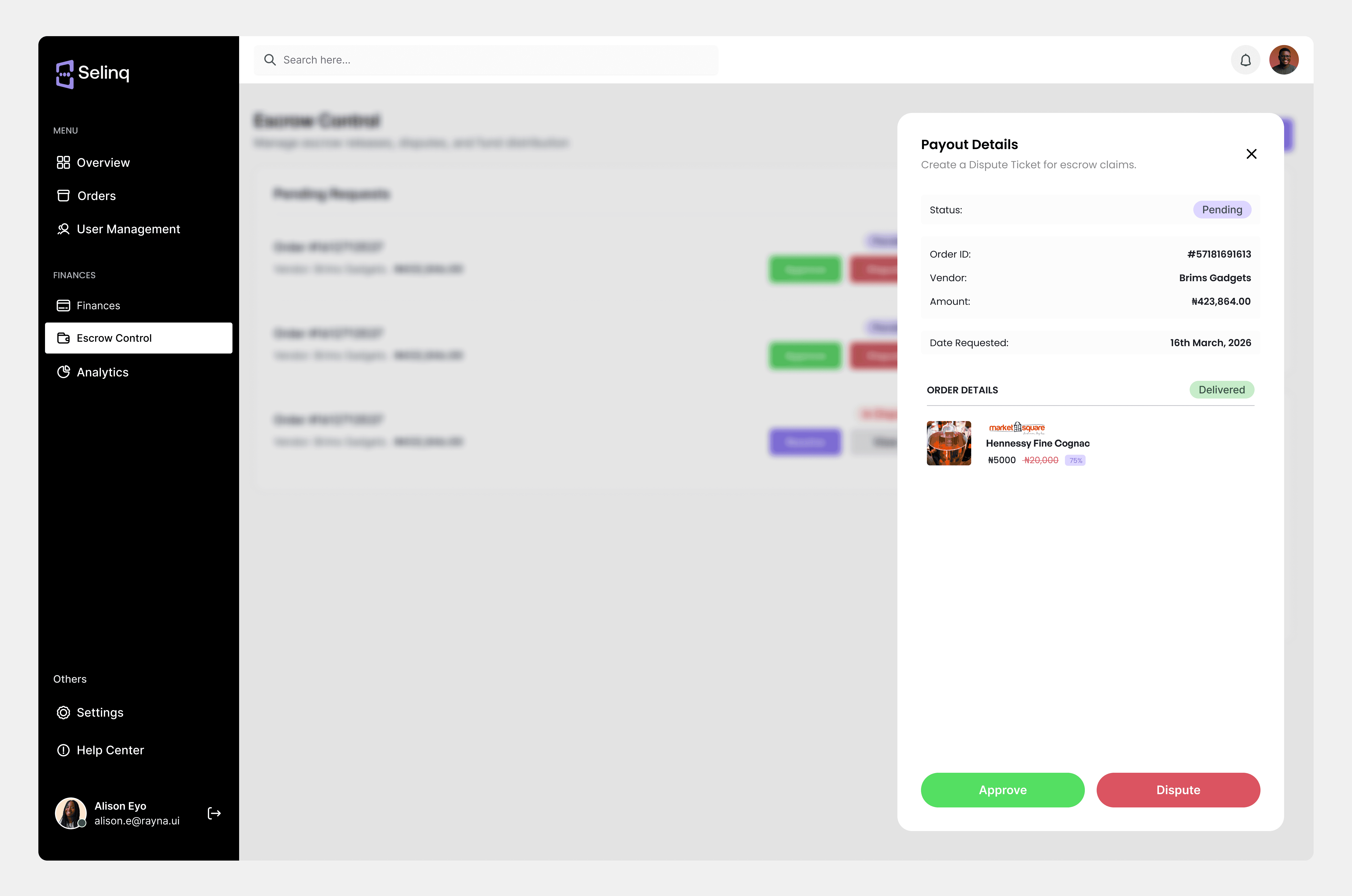
This is where platform trust is managed in real time. Admins can see every transaction in escrow, enable batch or manual release or hold funds, and dispute release requests, and review the exact payout details on each Payout request.
1.3 User Management
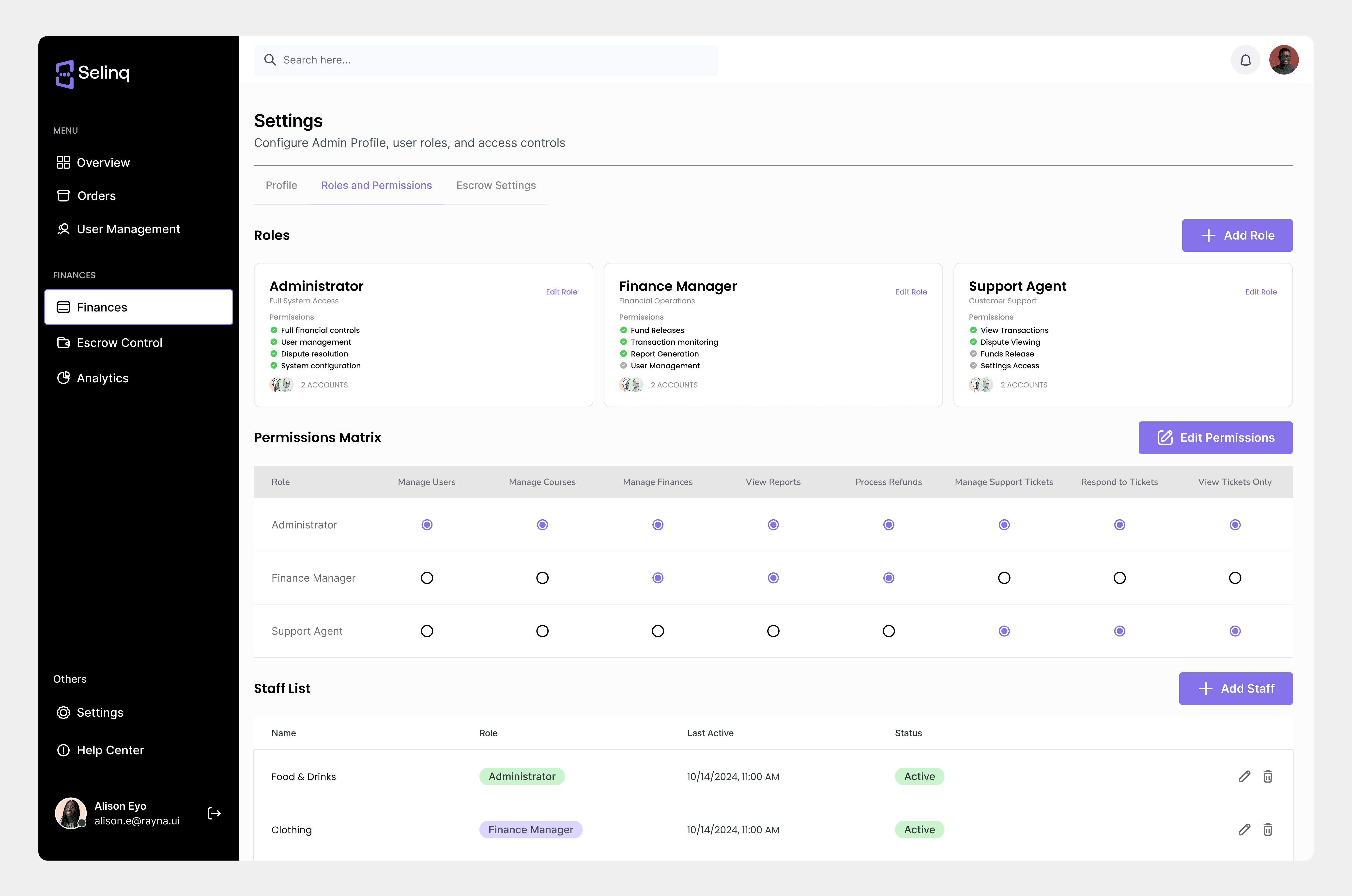
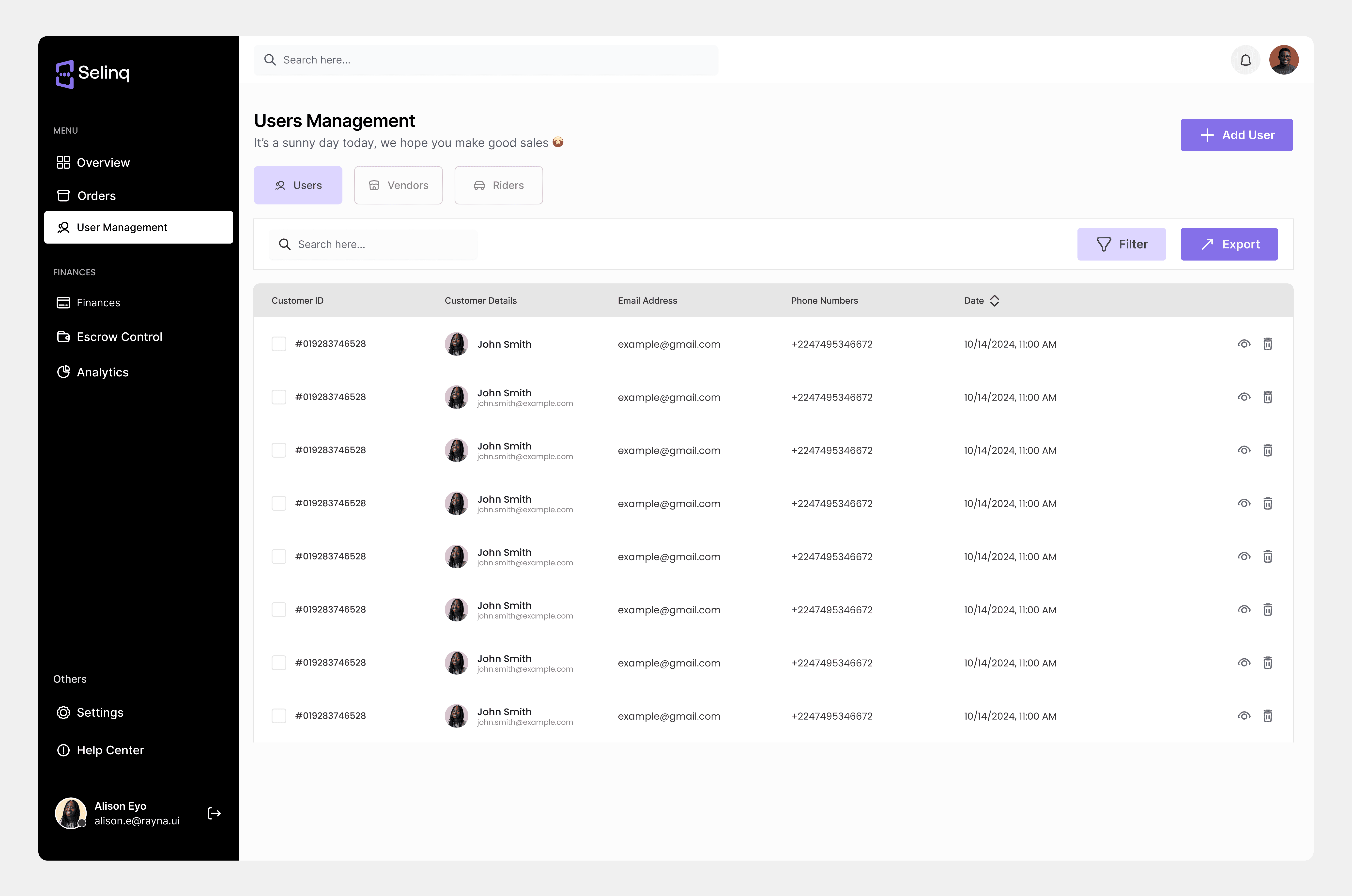
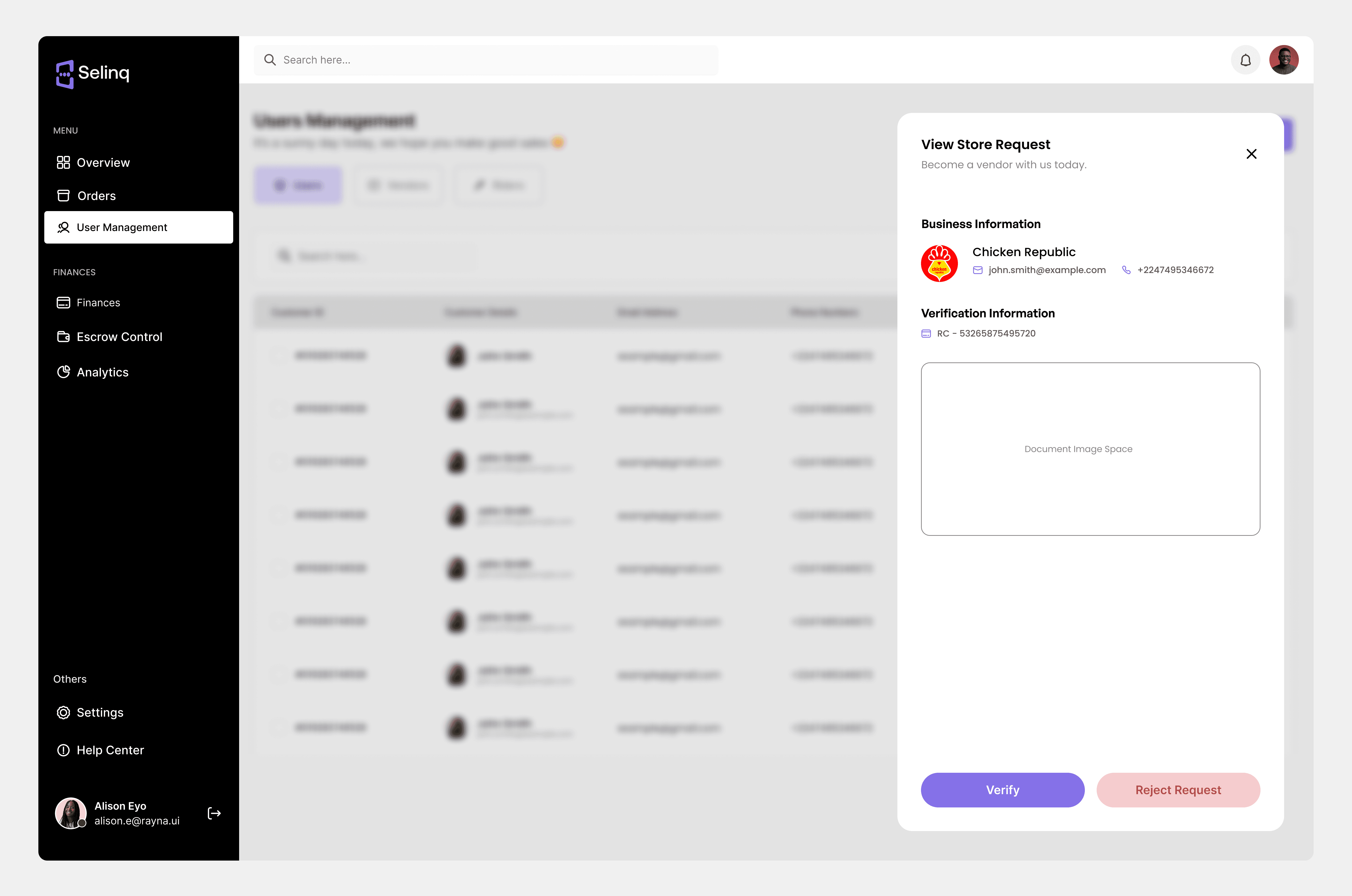
Admins can view, verify, suspend, or flag any user (vendor, customer, or rider) from a single table. Verification status is surfaced upfront, so unvetted vendors don't slip through to accepting live orders. Quick-access role filters keep the list manageable as the platform scales.
2.1 Onboarding
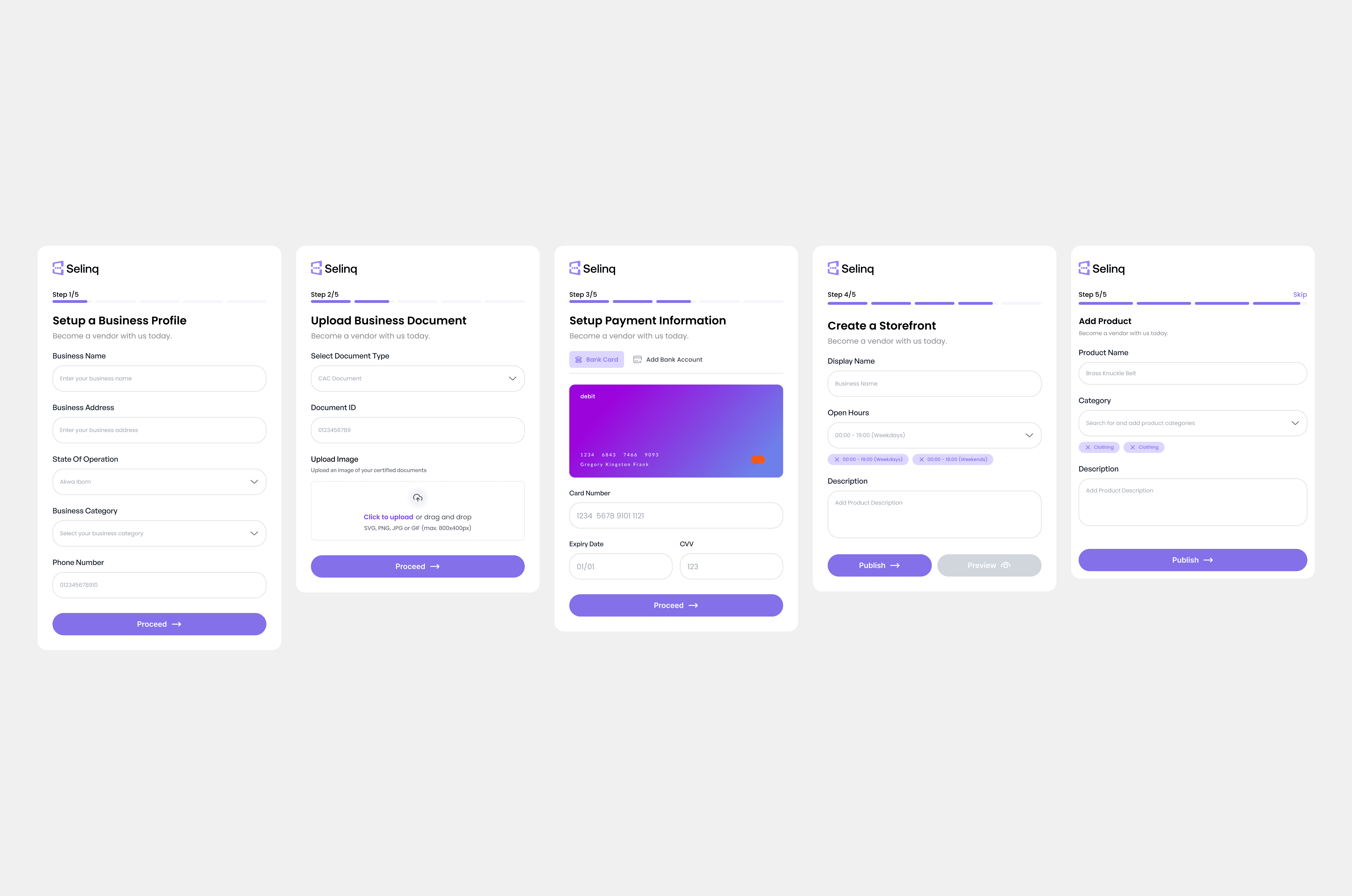
First impressions set the tone. The vendor onboarding is a stepped flow broken into digestible stages (as Modals) so new sellers aren't overwhelmed before their first order. Progress is always visible, each completed step is celebrated with a small state change, and the current step is focused so vendors know exactly where they are and what's next.
2.2 Order Management
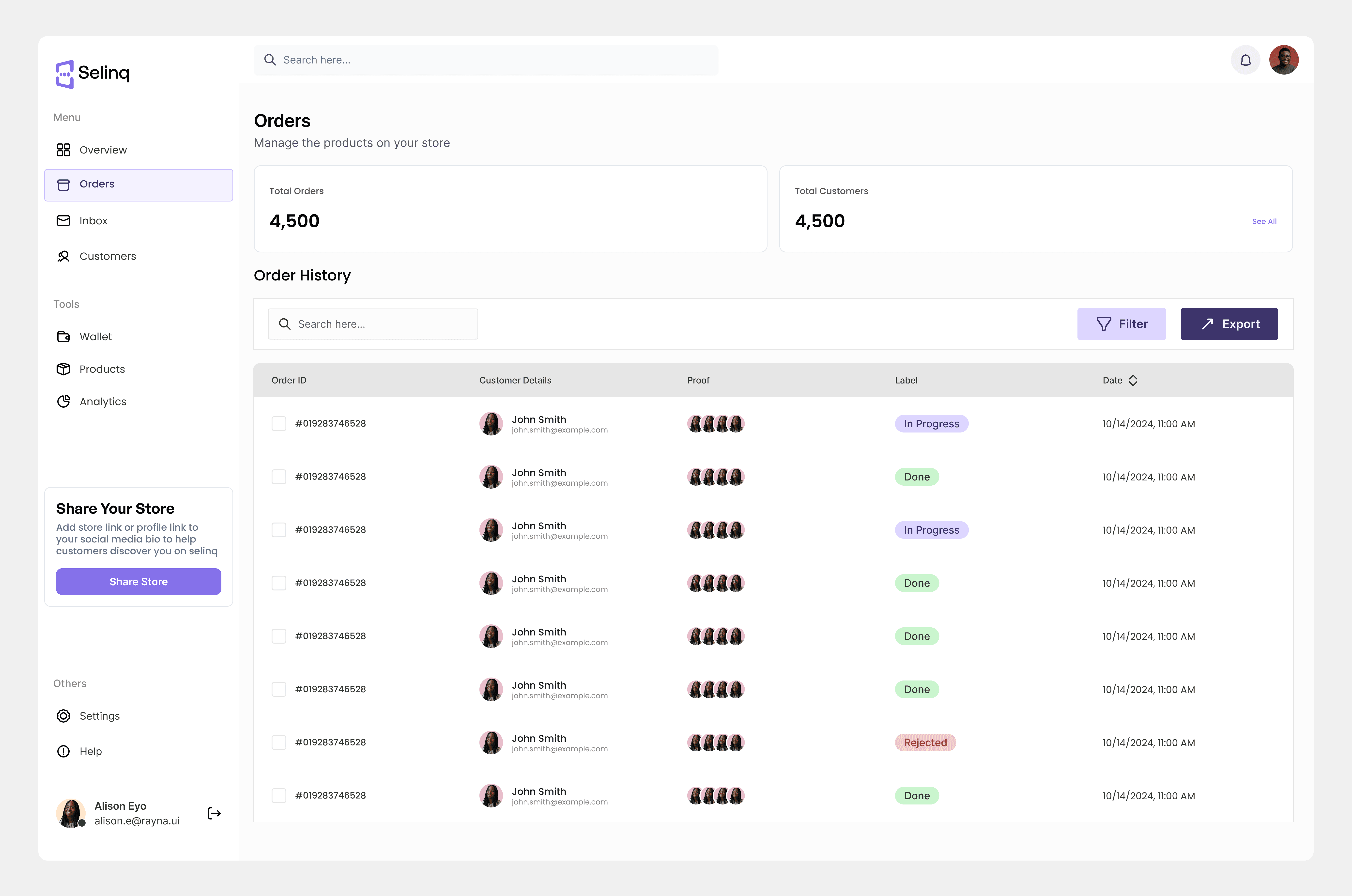
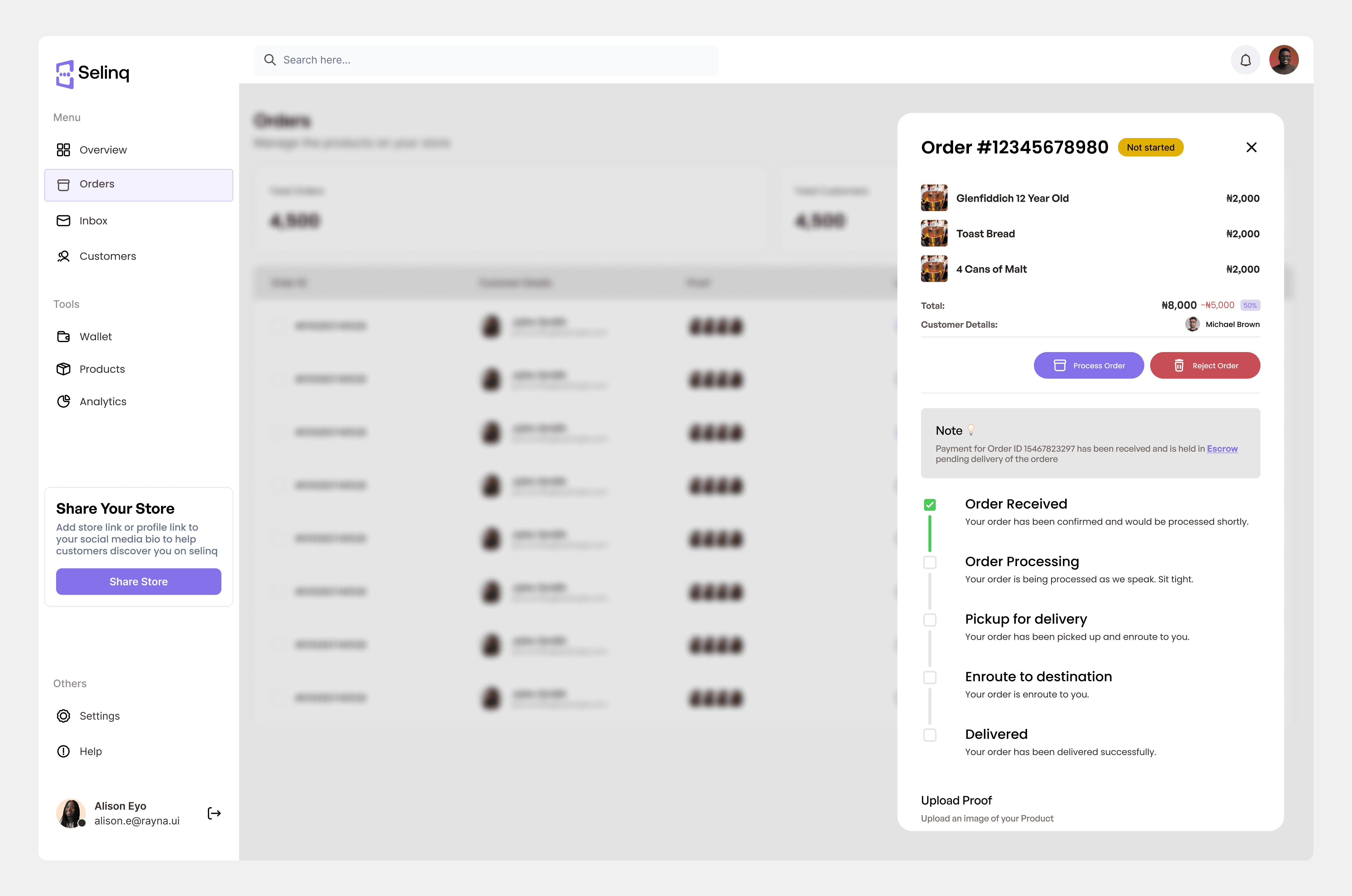
The vendor's real-time nerve centre. Incoming orders surface immediately with customer name, items, and order value. A one-tap accept or decline keeps decision-making fast. Active orders track through preparation and transit, giving vendors a live view of their pipeline without any guesswork.
2.3 Earnings & Wallet
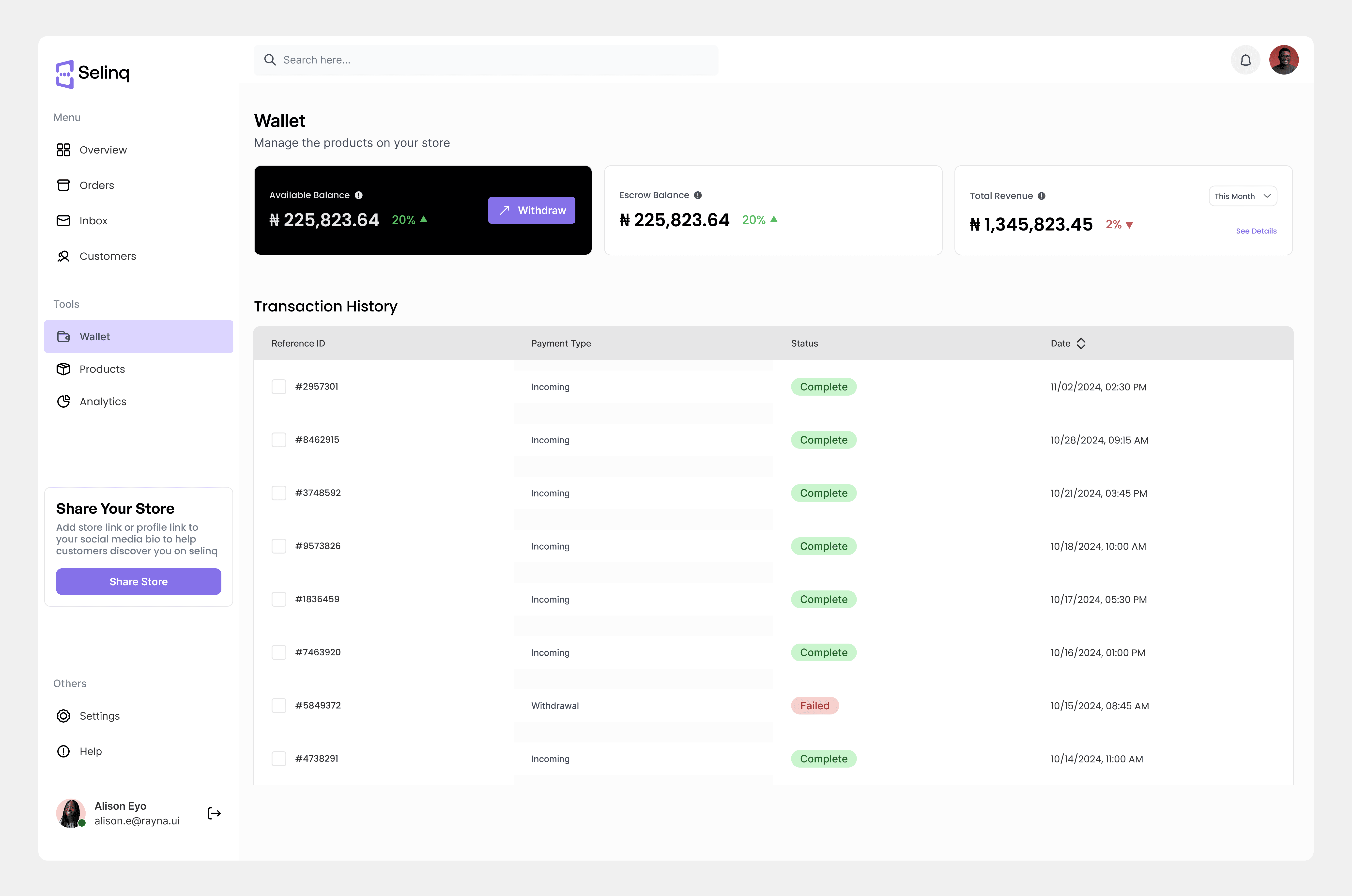
Vendors shouldn't have to wonder when they'll get paid. The earnings screen separates cleared funds from held escrow balance, so there's never any ambiguity. A payout history below gives vendors confidence that the system is working every released order is timestamped, traceable, and tied directly to a delivery they fulfilled.